Water, Healing, and Evidence-Based Design
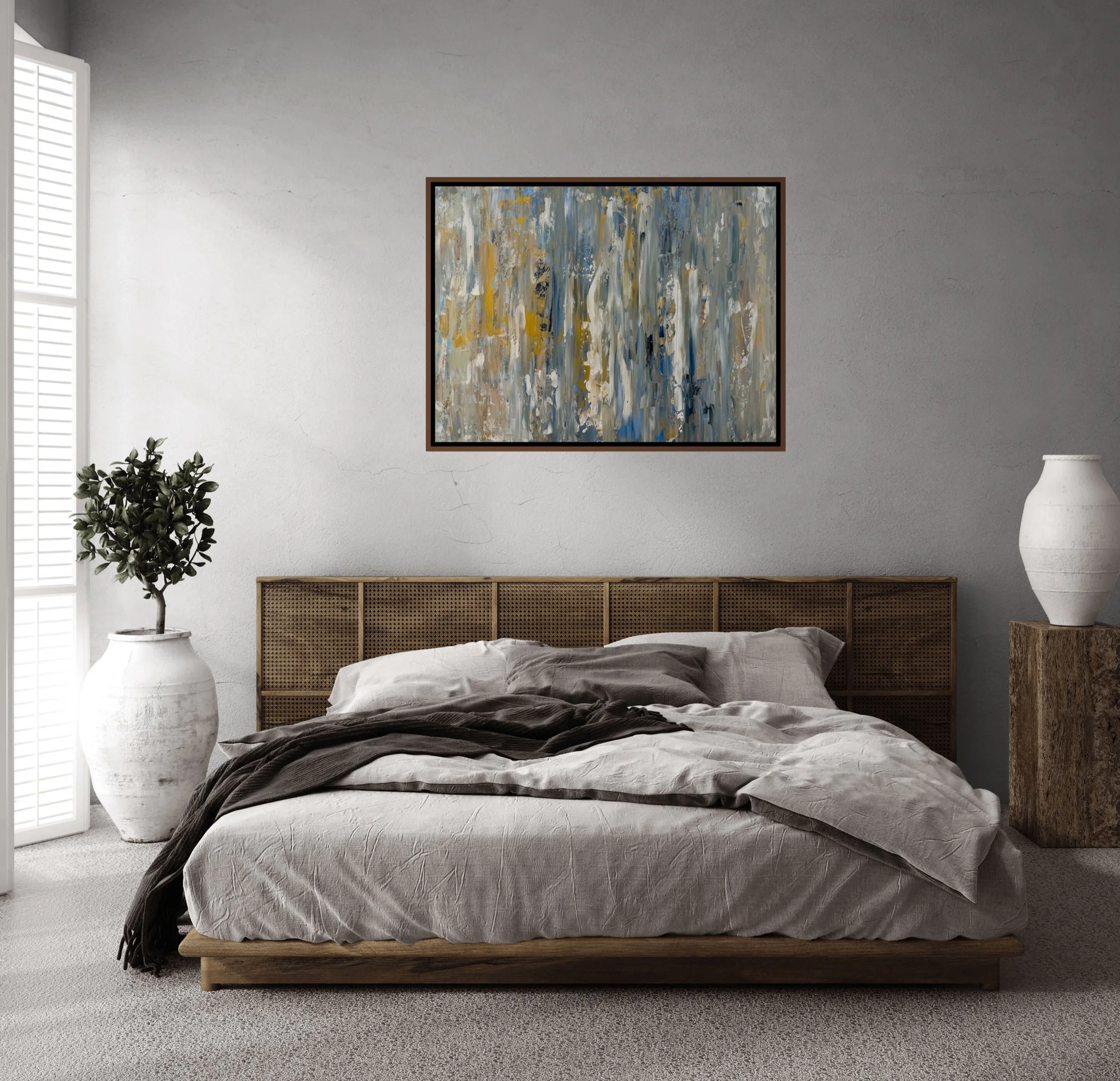
Beautiful Dreamer by Dorothea Sandra, EDAC
I’m always looking for new ways to improve myself as an evidence-based design artist. To do this, I read lots of medical/scientific study articles, with many of them coming from The Center For Health Design.
According to a number of scientific studies, nature-based visual art and nature-based sounds can positively impact healing. One study even clearly showed that nature-based positive distractions can positively impact patient perception of pain.
In this blog, some of the information comes from my book, 100 Days of Happy Happy Art, Evidence-Based Design, which is about my artistic journey into the world of evidence-based design.
Water is one of the more important elements of nature. It has been a symbol of life, change, the unconscious, purification, flexibility, forgiveness, and more.
Cultures throughout time have had different meanings and interpretations for water. Native American tribes honored it. Ancient Greeks saw it as a symbol of power. In Taoism, water remains a symbol for virtue and the highest goodness.
In evidence-based art, compositions with water should evoke healing. “Calm water scenes are preferred, while gushing rapids or crashing ocean waves should be avoided. Even a trickling water fountain might create negative experiences for people with full bladders or nonfunctioning bladders.” (Distinctive Art Source, “Healthcare Art Bloopers,” 2013)
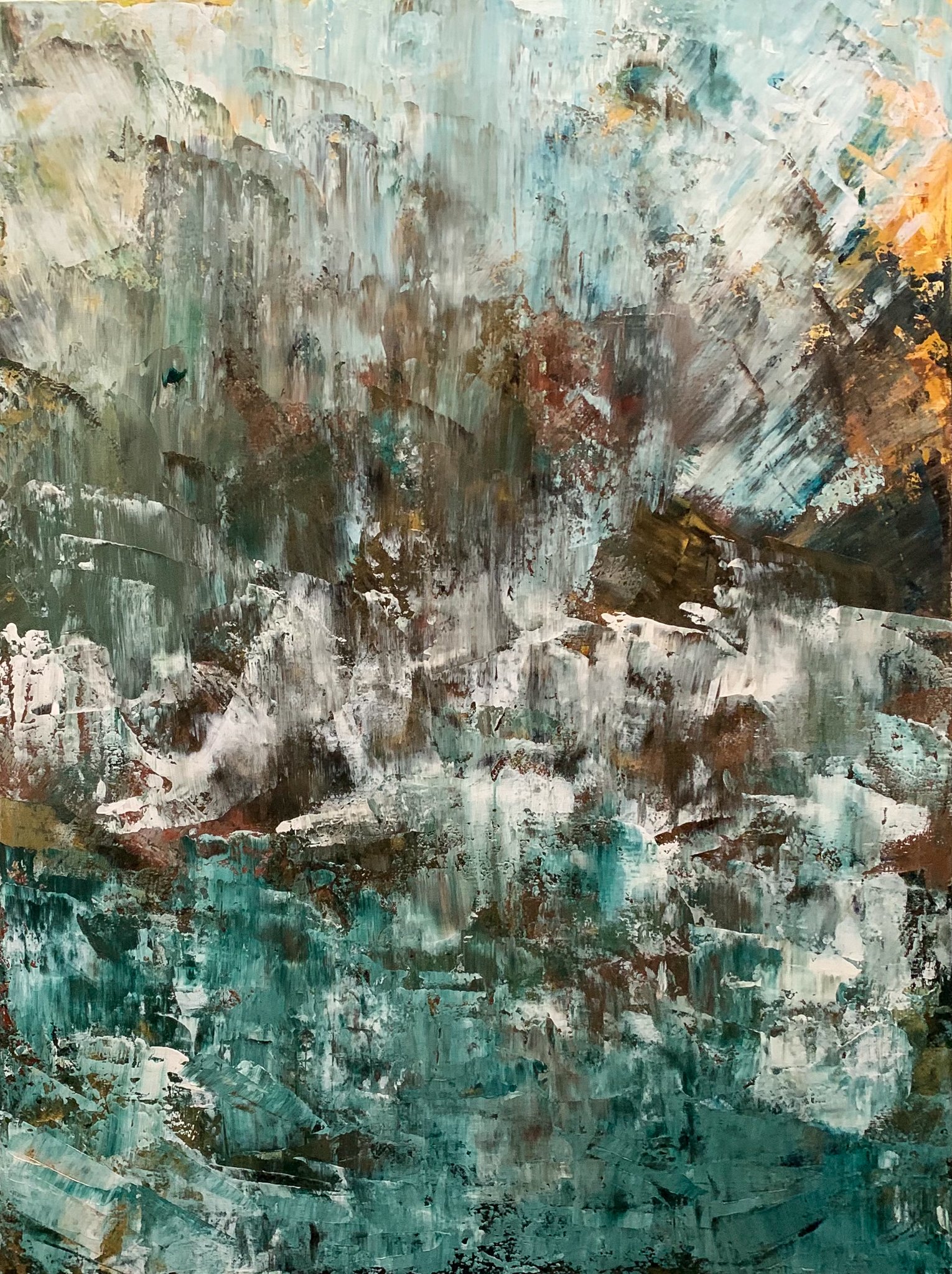
The Tempest by Dorothea Sandra (SOLD)
After seeing my evidence-based floral art, many people have a hard time seeing the real inner artist in me. I tell people—all the time—that I am much more of an abstract artist inside and that I just love painting abstract water-inspired scenes.
This goes back to my childhood art lessons. I was first trained as an artist at seven or eight years old, often right on the shores of the Atlantic Ocean in Rockport and Gloucester, Massachusetts. The two artists who trained me were trained by Roger William Curtis, a famous New England seascape artist and the director of the North Shore Arts Association for many years.
When I think of water and art, my first thoughts are often of the ocean waters I learned from, which I associate with primordial power and violent movement.
For evidence-based design art, however, I calm the water and make the composition happy.
In the video there are examples of this.
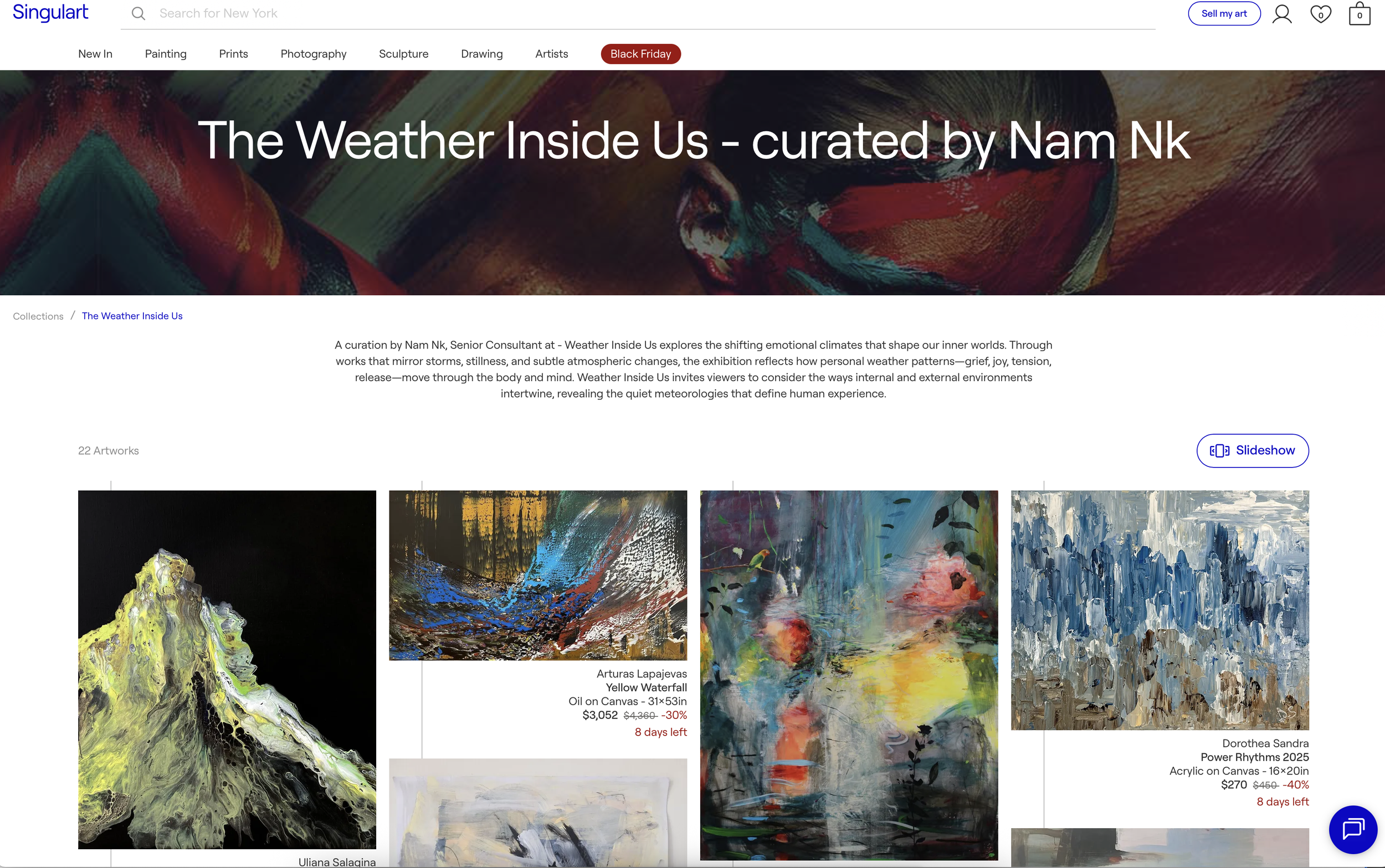
In November 2025, two abstract, water-inspired paintings were included in the international curation, “The Weather Inside Us,” curated by Nam NK, India and the United Arab Emirates. Both paintings, Power Rhythms and Beauty In Chaos, are abstract expressions of my experiences with ocean water. (Power Rhythms is for sale through Singulart.com, and Beauty In Chaos was sold to a new client the very first time I showed it publicly.) Both paintings express water but with more vigor and power.
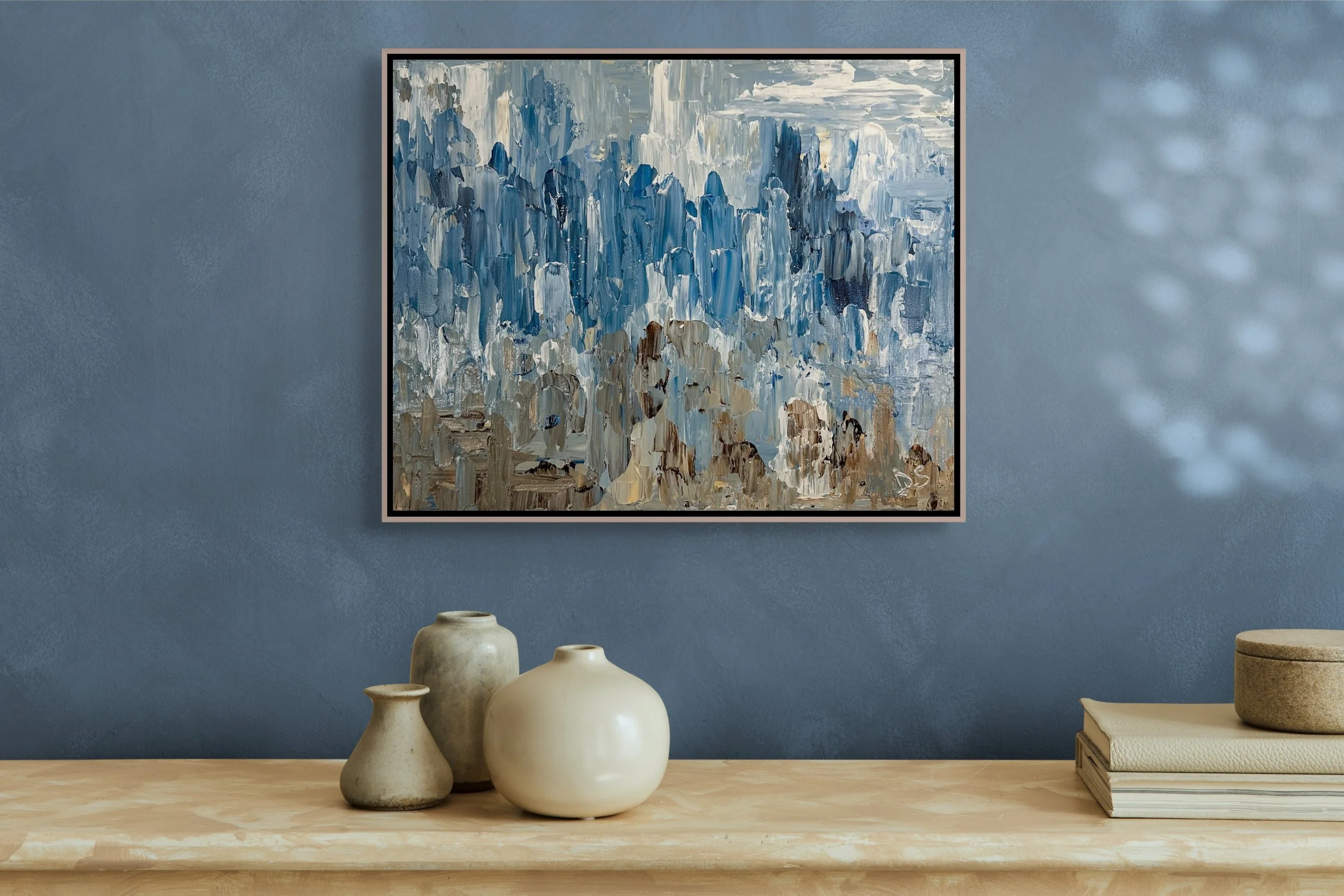
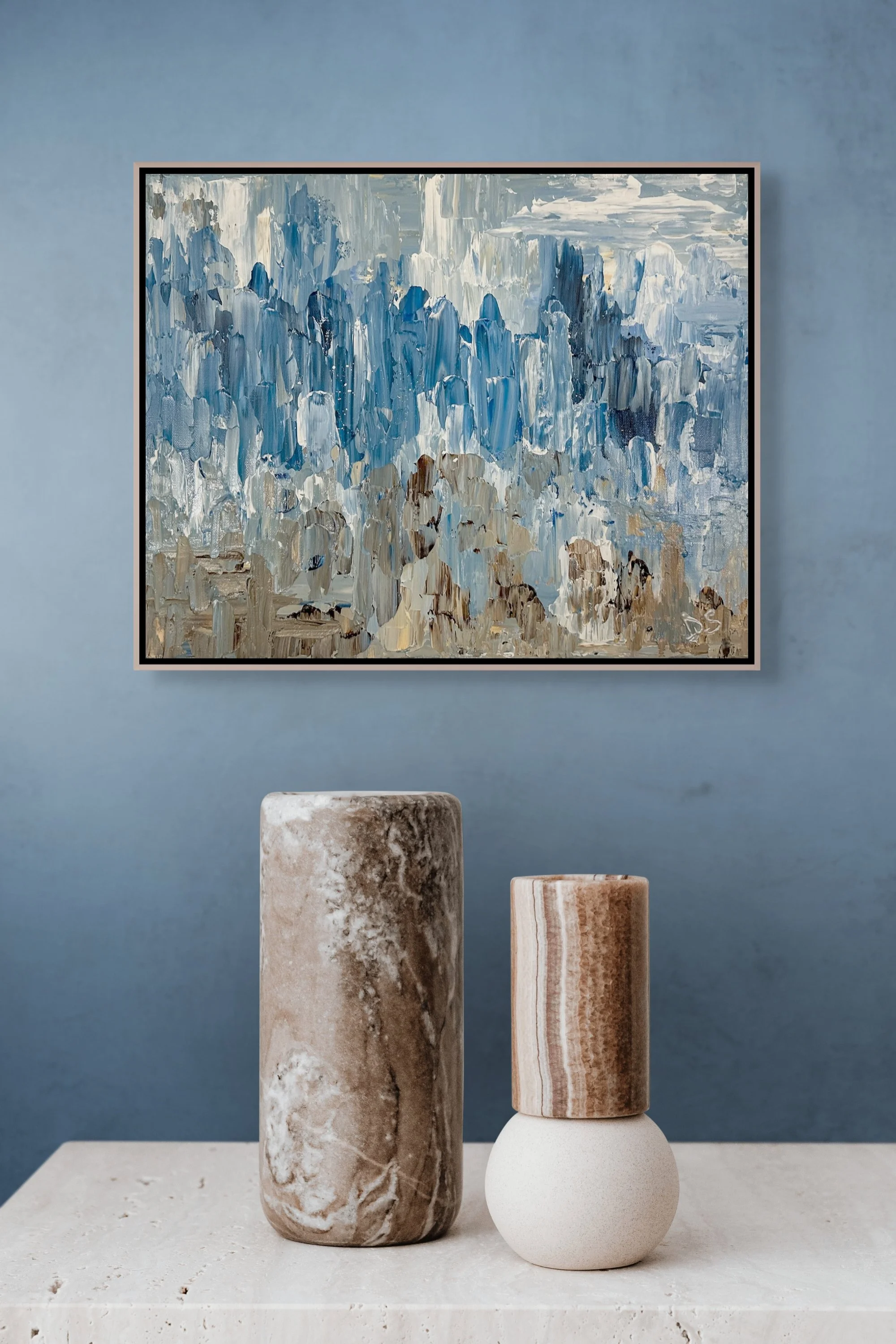
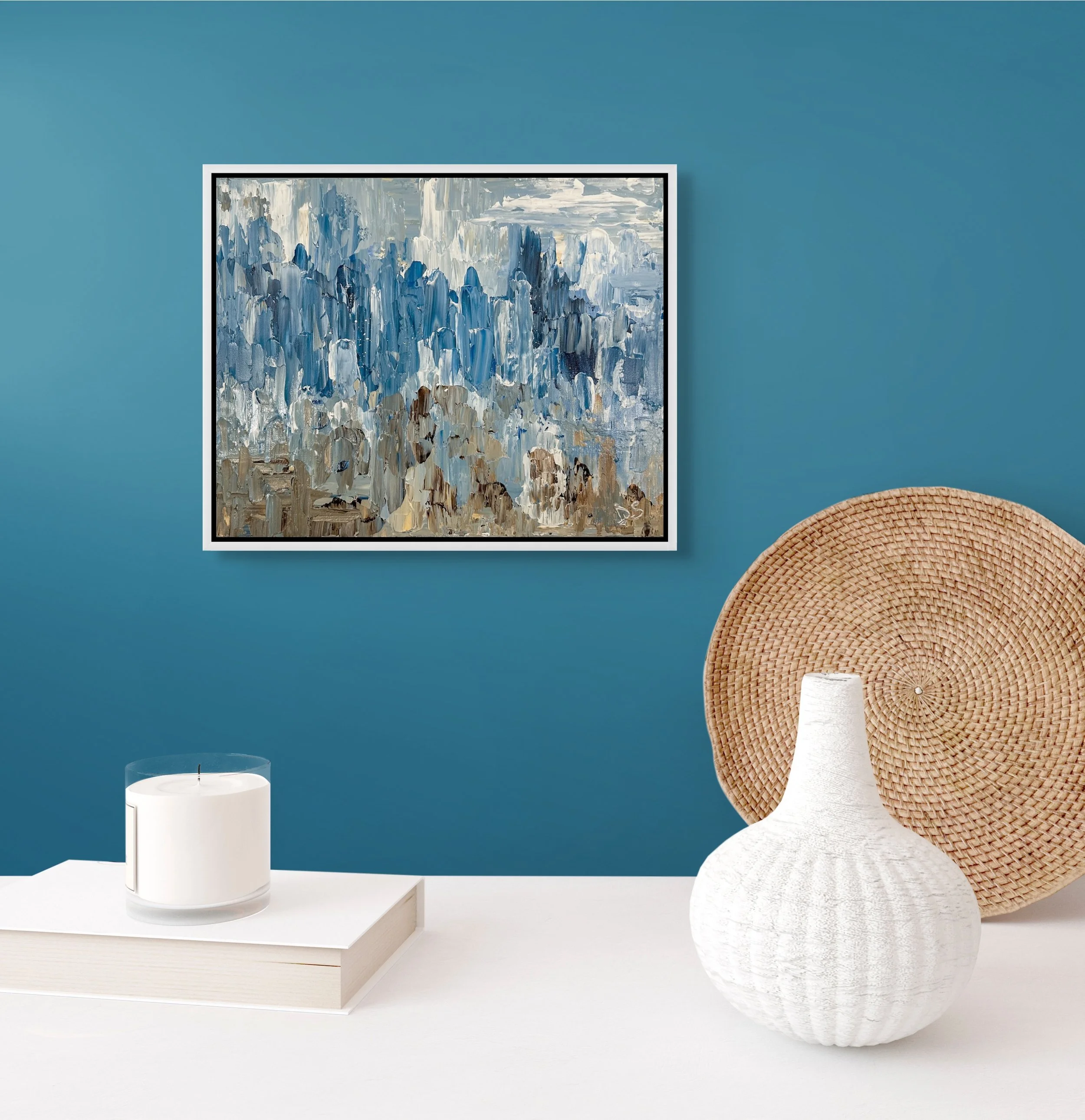
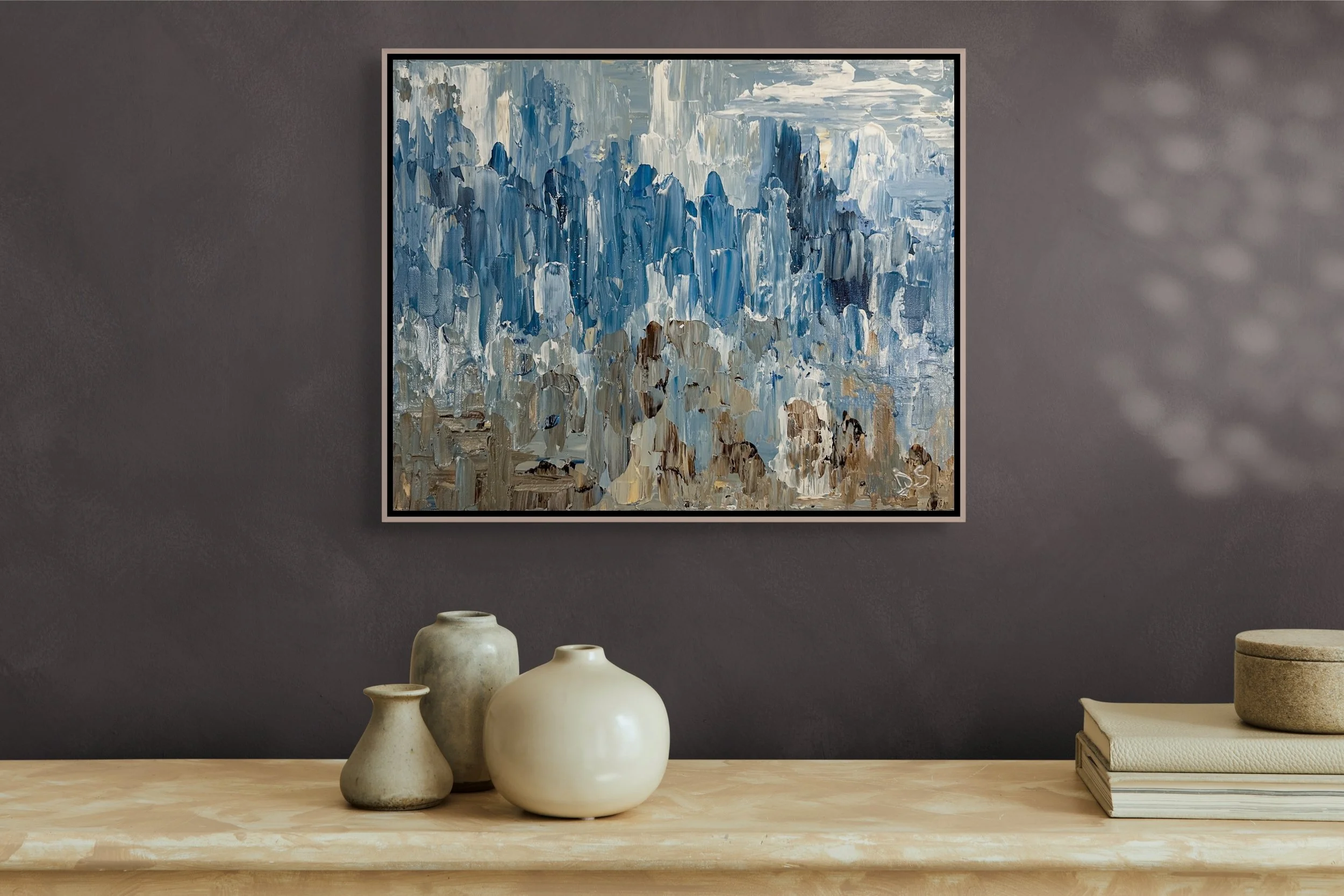
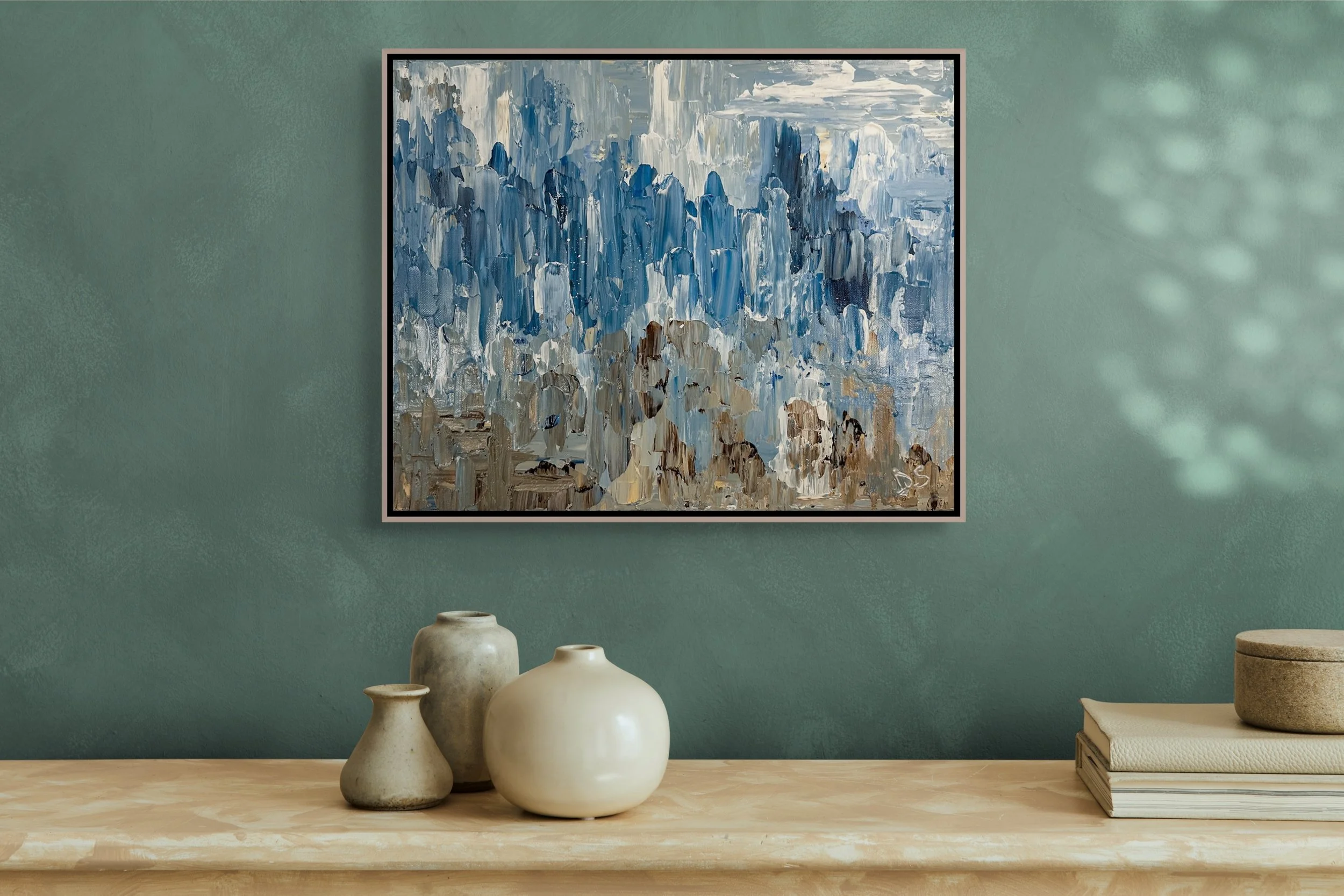
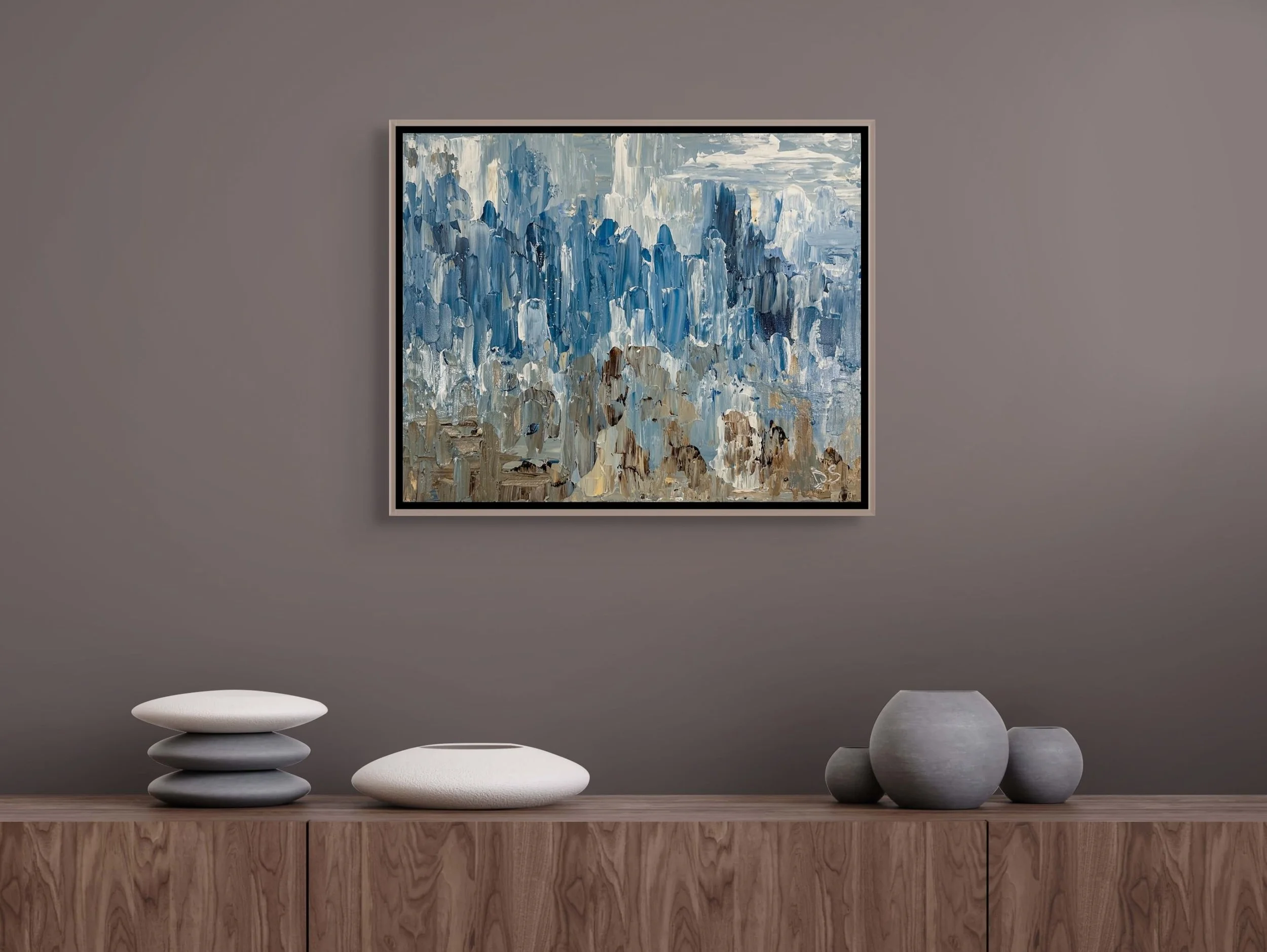
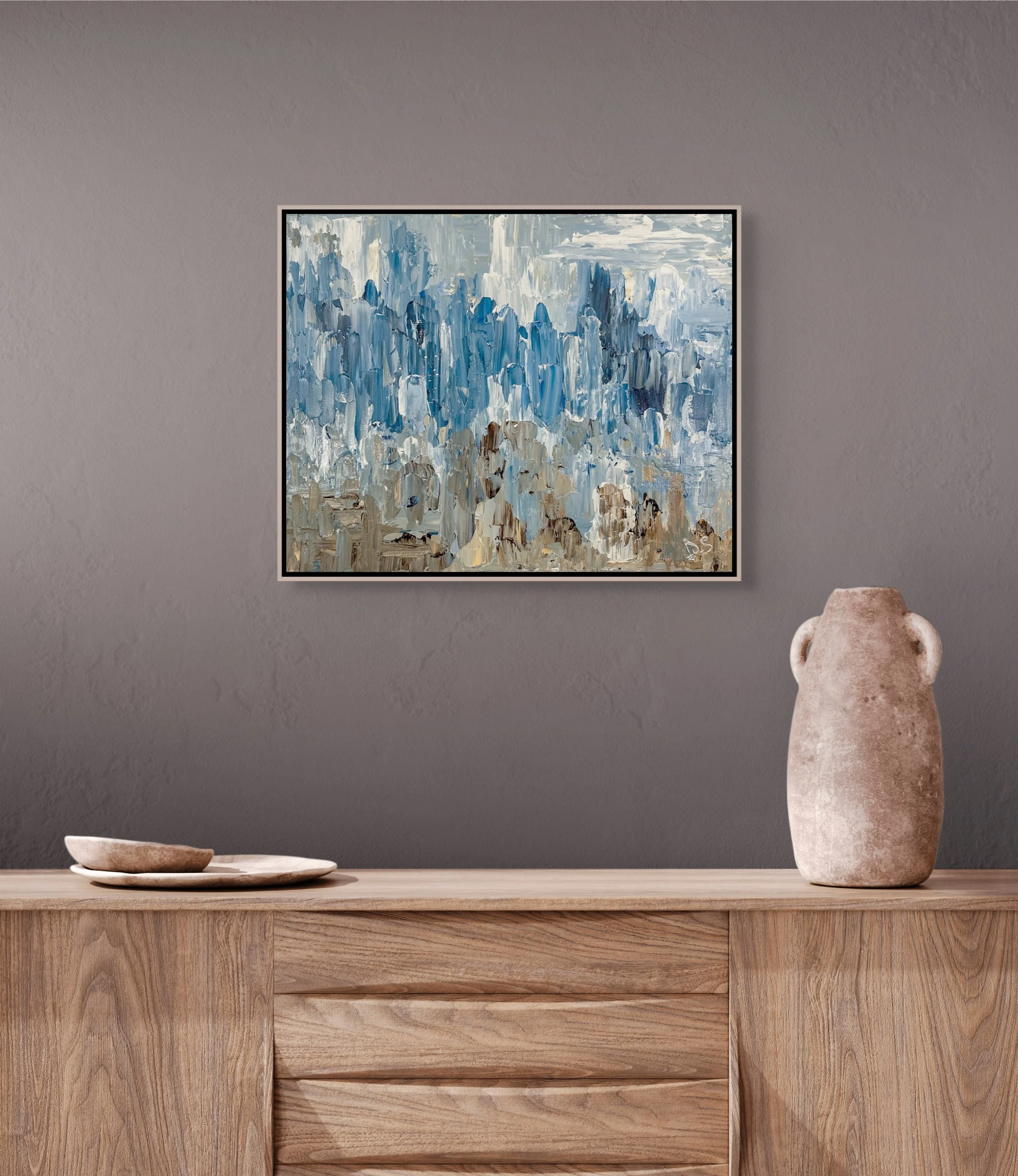
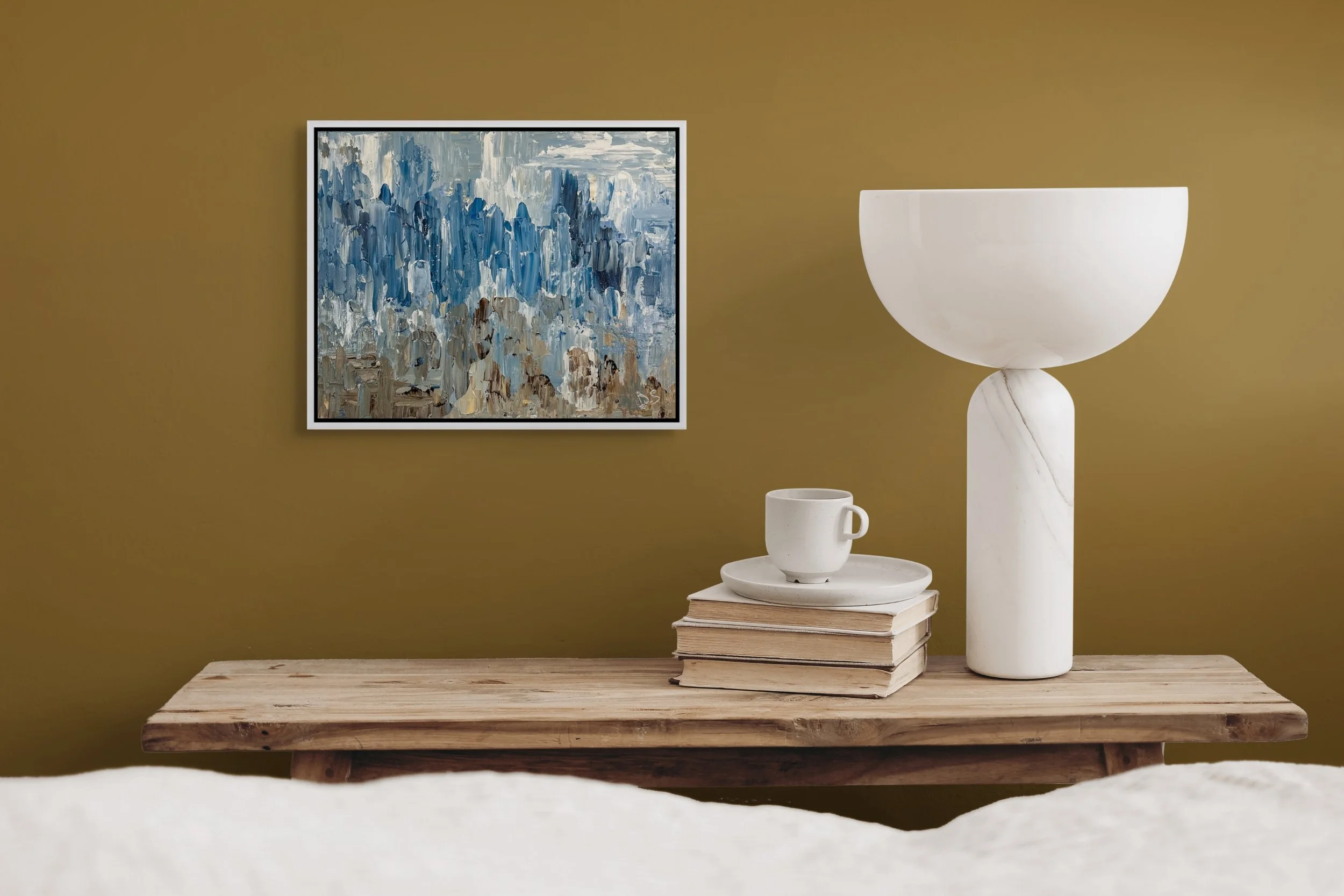

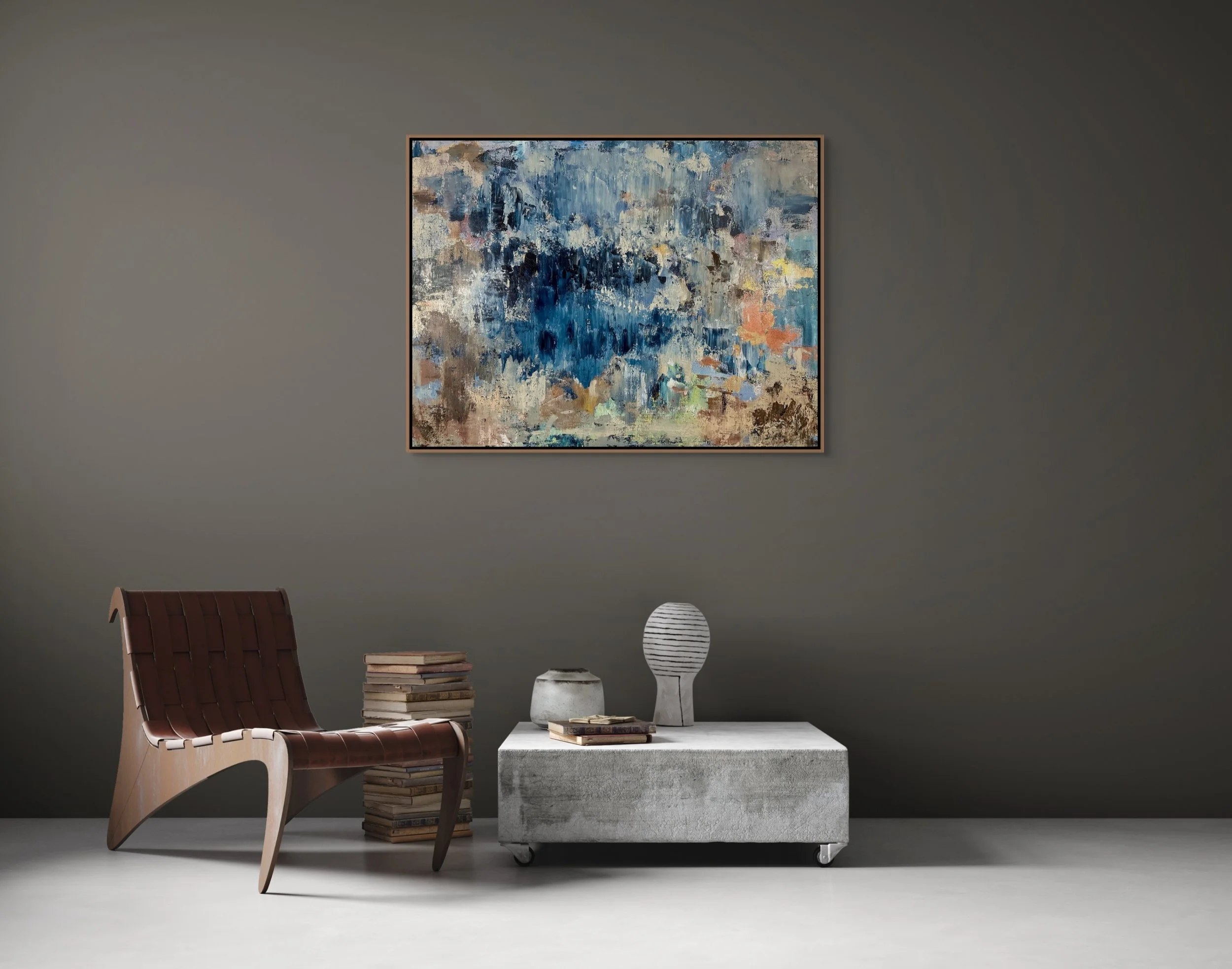

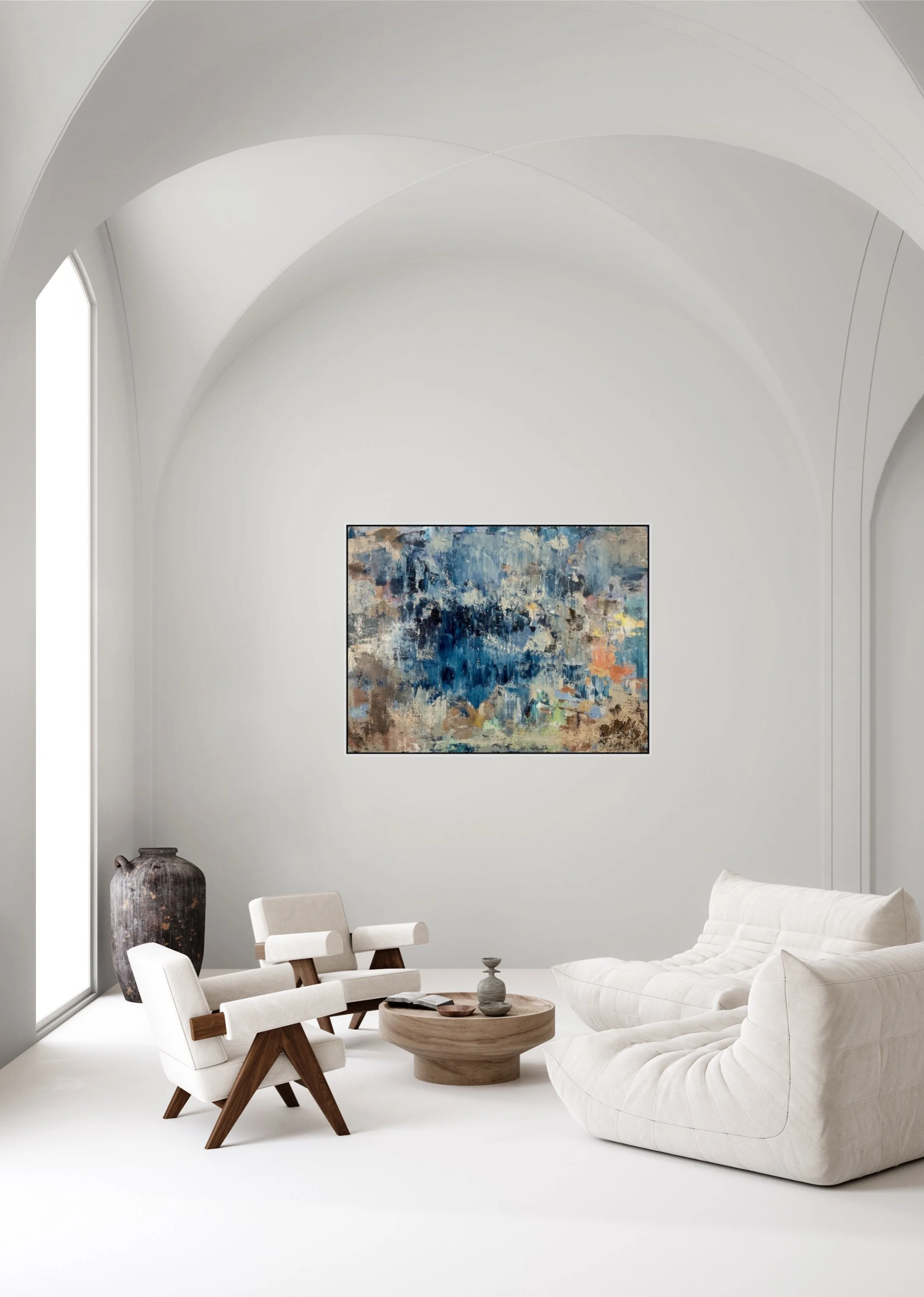
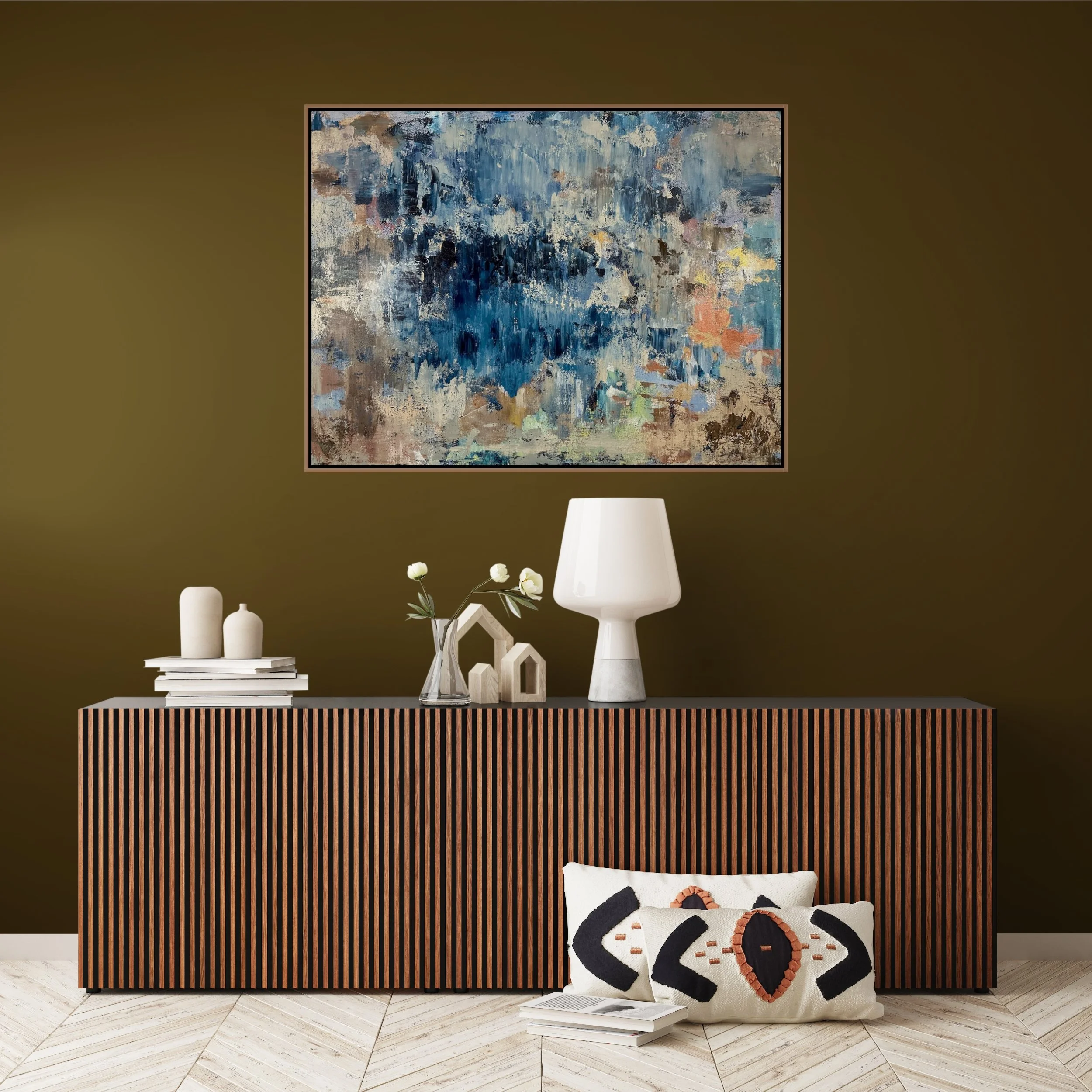
Click on the image below to view the international curation.
Artistic And Scientific Merit Of A New Design
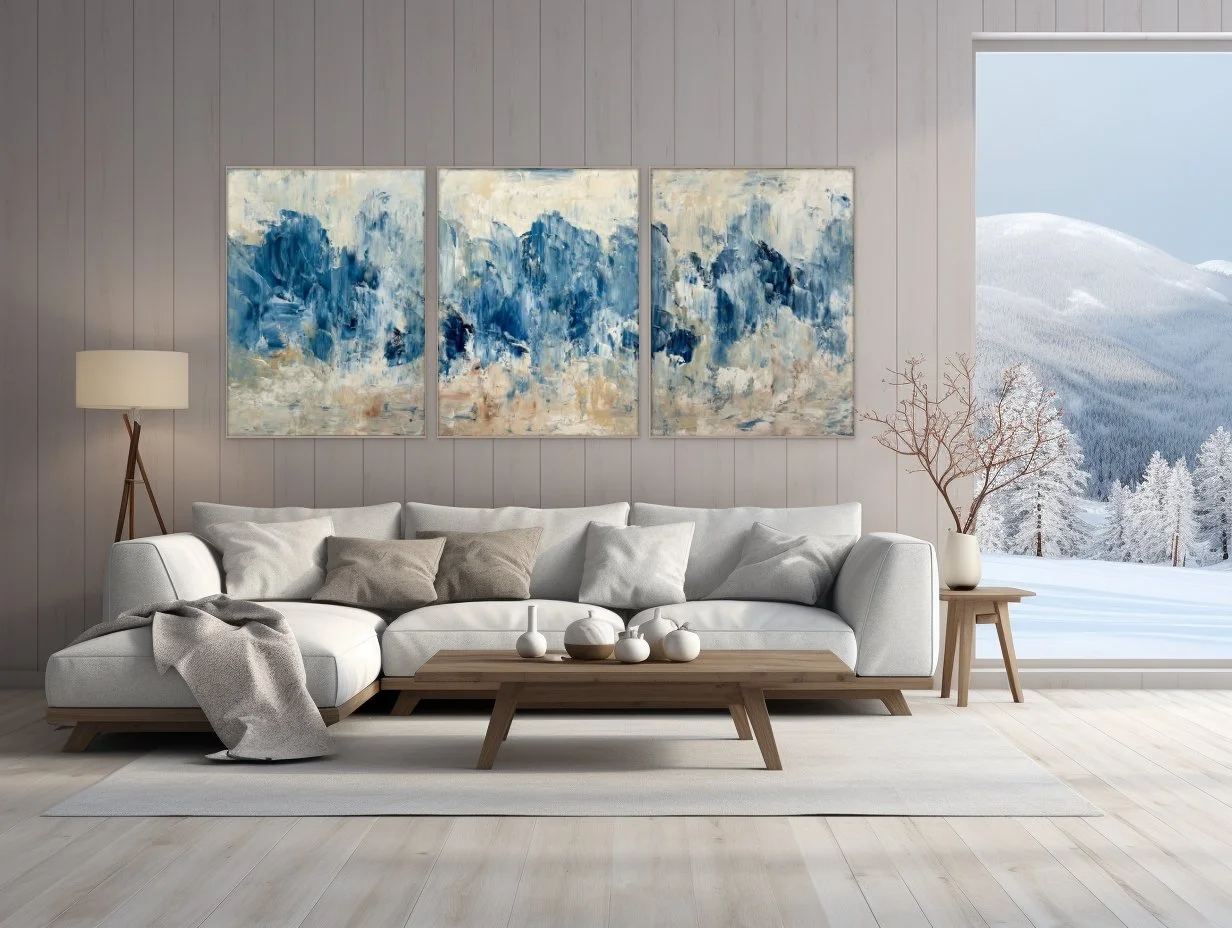
One of my absolute favorite water-inspired paintings was a 3-canvas composition I called JOYFUL TRIPTYCH.
At the time of its creation, I was EDAC (evidence-based design certified), and I was experimenting with creating an abstract work of water-inspired art that would also lead the brain to produce calming as well as pleasure/happiness chemicals.
I wanted water and movement (but not too much movement, which might trigger a bladder) and I wanted viewers to experience a sense of joy but also stability.
Up until this point in evidence-based design research, abstract art was frowned upon and discouraged. I wanted to see if I could create something that was in the abstract category but also acceptable (at least marginally) as evidence-based design.
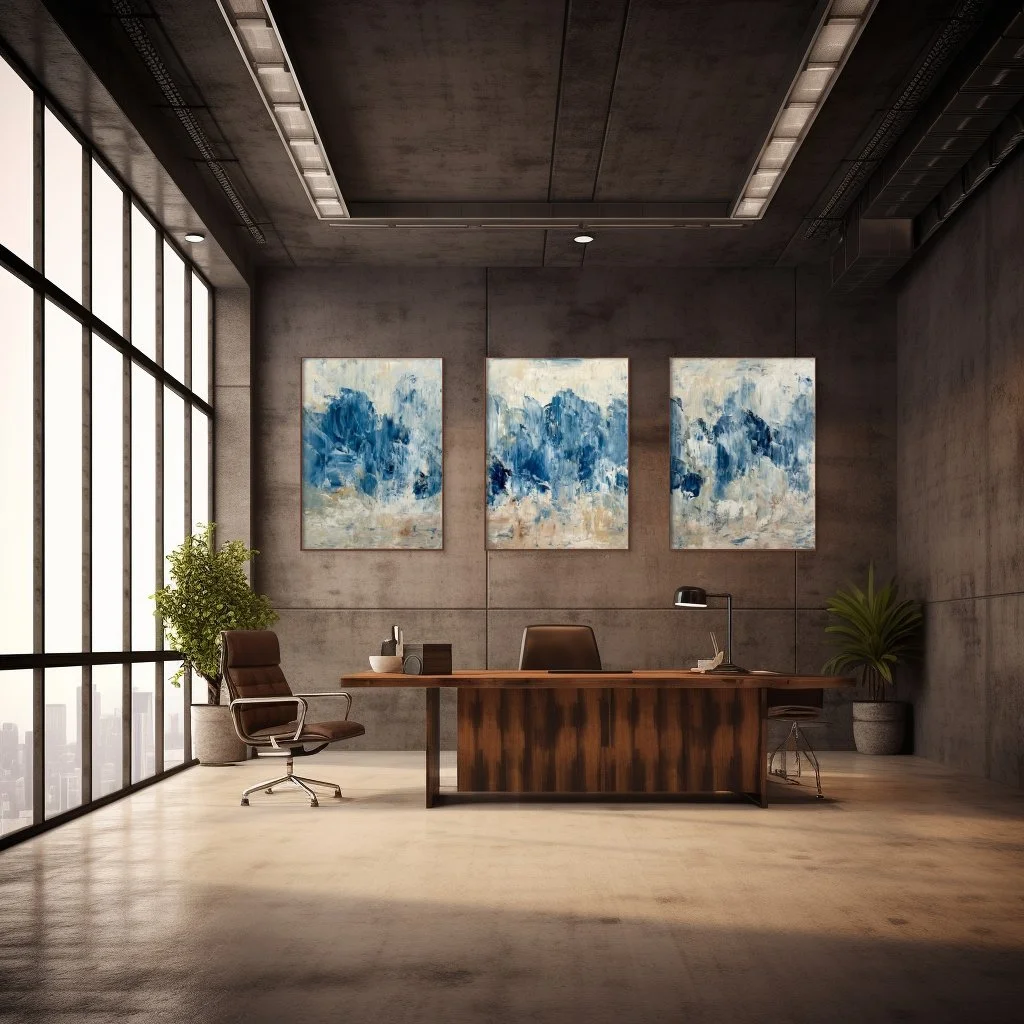
Joyful Triptych by Dorothea Sandra, EDAC (SOLD)
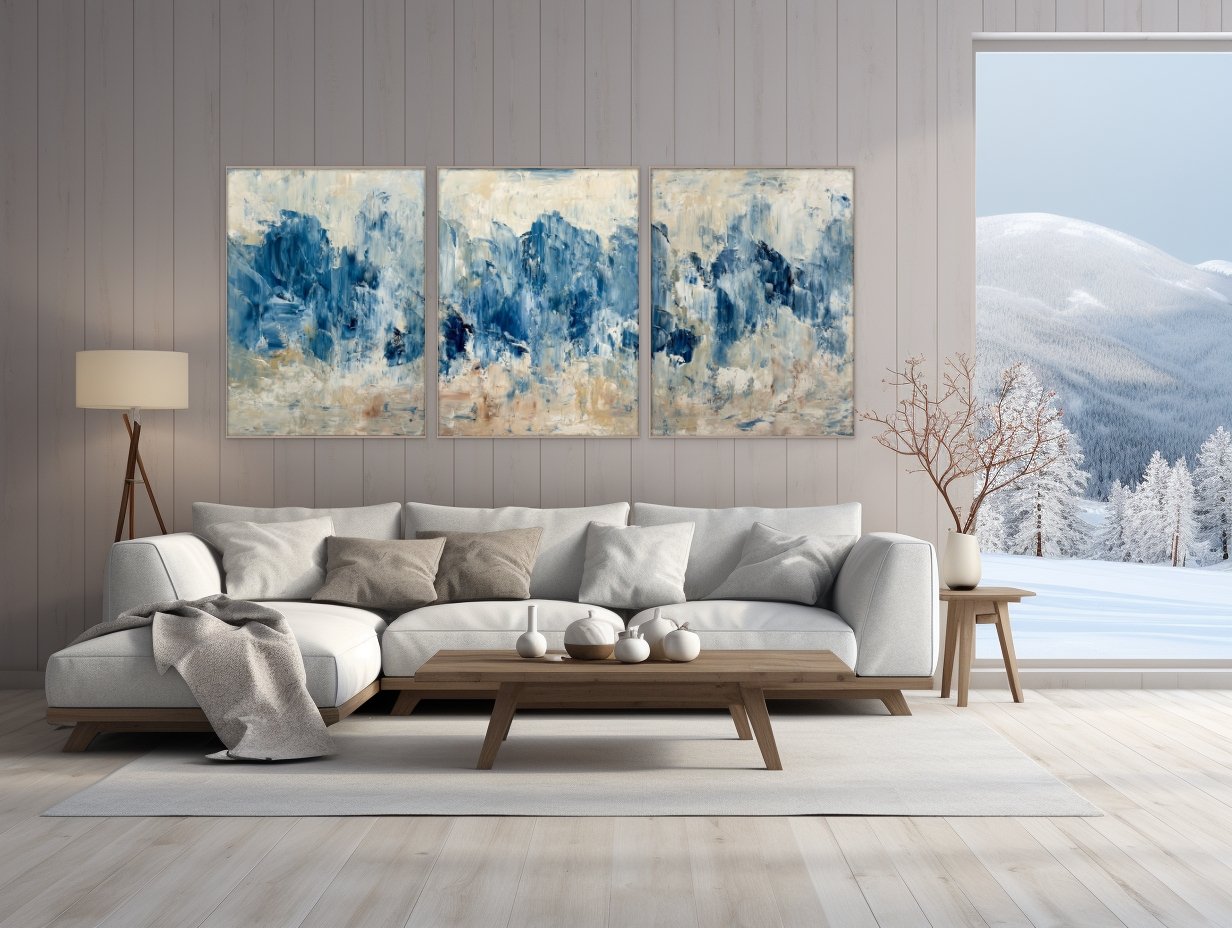
Even though this triptych was water-inspired, it fit right in within a snowy mountain setting.
What I love about it is there’s beauty and drama (artistic merit) as well as (through color, palette knife movements, and evidence-based design knowledge) brain chemicals producing happiness and tranquility (scientific merit).
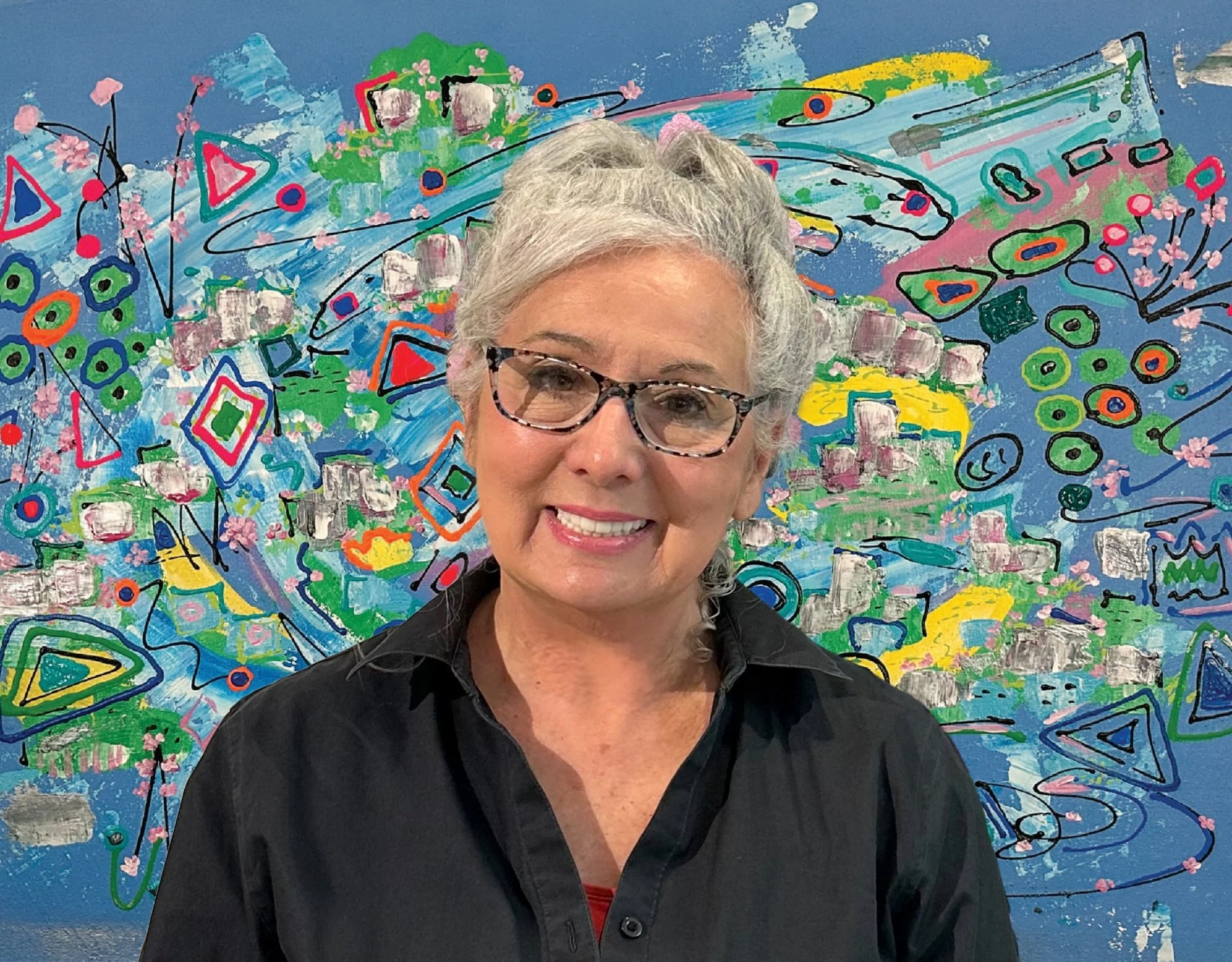
I am also very happy and honored to announce that I will be in amazing, beautiful, and fabulous Shanghai, China from the middle of February 2026 to the middle of May. I will be staying and painting at the Swatch Art Peace Hotel. If you are in this area during this time, please don't hesitate to visit with me.
I truly enjoy meeting new people!

Why Did I Become Evidence-Based Design Certified?
A couple of years ago, I was on a very popular—and seemingly legitimate—New York City art website that was promoting art for health and healing.
Get this—misshapen and horrifically disfigured images; spread open naked human legs and rolls of unhealthy body fat; abstracts of daggers and dripping blood—all amazing works in their categories—just nothing I would consider appropriate for the elimination of stress or the recovery of human health.
This set me on a course for knowledge. I wanted to discover if I could actually learn to design/create with your health and healing in mind. I found The Center For Health Design with its excellent EDAC (Evidence-based Design) courses and certification. Imagine thousands of doctors, hospital administrators, health facility architects, hospital room designers, and many more professionals worldwide basing their creative/artistic decisions and designs on actual medical studies.
Instead of some untrained art critic or consultant setting the standards for art, health, and healing, I now had real medical professionals to learn from and follow. The EDAC exam was the most challenging test I ever took (and I’m a university graduate with high grades), but the knowledge I gained—which I now incorporate into my designs—was absolutely worth all the hard work.
It’s amazing how many people who buy my evidence-based designs tell me how this “evidence-based” art actually shifts their moods and creates positive and uplifting feelings/states of mind.
Here are four examples of what should never be promoted as evidence-based art for health and healing. Two of the pieces sold within minutes to a collector. They had merit, just not as evidence-based design art.


The first painting is titled Anguish and is part of a series I created about child abuse. This painting artistically reflects the mental and emotional suffering that children experience when they are not nurtured in healthy ways.
The second work, Killed Opportunities, shows how barren and tragic a child’s life becomes as opportunities for health and happiness are killed.
The third painting, Death By Power, reflects negative power winning. The face of a hideous creature looking at the viewer (top center) and a hand with the middle finger raised up (lower center) are perceptible.
In February 2025, I sold The Tempest, the fourth painting, again to a collector.
All four paintings have merit as works of abstract art. The art itself, however, does not de-stress or promote health and healing. In fact, it does the opposite.
Can you imagine the added stress and trauma of looking at any one of these paintings while recovering in a hospital bed? Before training to become evidence-based design certified, I wondered why influential people in the art world were calling paintings like this art for health and art for healing. It just didn’t make any sense to me.
Here are more beautiful paintings that would not be considered 100% appropriate evidence-based designs. Some I sold, some are for sale through a Paris, France international gallery, my website, Galleri Soho in Sweden, and more.
When I create evidence-based design art, I use design suggestions and strategies based on credible scientific and medical research. I get my information from a variety of sources, but I enjoy and value the trainings (which are required for EDAC recertification) at the Center For Health Design and their journals and repository information.
There’s a difference between pretty art that makes us feel happy and art that triggers our brains to feel happy based on medical and scientific research. Evidence-based design is that kind of art.




Is Evidence-Based Design Totally New?
Is Evidence-Design Totally New?

If you asked the 6th BCE Greeks of Epidaurus, they might take you to one of the most celebrated healing centers of the classical world—the Asclepieion hospital. In their hospital, patient rooms faced eastward. Why? It is believed the rooms were intuitively designed and placed toward the sun to promote healing.
Many centuries later, many movements from different countries came together in the 1970s to create a new field called evidence-based design.
Who are the people whose forces created this new discipline? Doctors, Scientists, Architects, Interior Designers, Psychologists, Sociologists, Anthropologists, and many others.

The Healing Window by Dorothea Sandra, EDAC, 36”x48”
This artist’s journey into Evidence-Based Design

Photo from the back of McLaren Northern Hospital, Petoskey, Michigan
I am known by many titles in the art world: Artist Of Happiness; a modernizer of traditional woodland compositions; a Great Lakes artist; a 21st-century experimental artist; creator of the evidence-based design collection, Symphonies Of Love; creator of the Smart City Art Collection; and more.
At the beginning of my evidence-based design artistic journey, I chose to create a painting depicting a view from a hospital room. The background of The Healing Window features Little Traverse Bay, as seen from the back parking lot of McLaren Northern Hospital in Petoskey, Michigan.
While composing this painting, I imagined myself in one of the patient rooms at McLaren Northern, looking out the window.
I also imagined myself in a patient room or in a healthcare lobby or a waiting area.


Artists always have lots of choices to make. Early in my evidence-based design floral art career, I chose creating happiness (triggering dopamine) over painting realism. My reason? I figured I would have more power to create happiness if I had more artistic power of the flowers. Not only did realism limit my ability to create happiness (dopamine), but according to medical and scientific research, traditional still-life wasn’t an art category most favored within evidence-based design.
So, is evidence-based design totally new? Yes and no. The flowers in this artwork are modern, cheerful, uplifting, and based on current evidence-based design best practices. However, I also wanted to pay homage to the accomplishments of those who came before us by incorporating elements that, especially in the design texture of the vases, evoke a rough, ancient Greek Asclepieion aesthetic.